
Kilbarry is more than a resting place.
It is the echo of vows kept across borders, of knights who gave their hearts to what they believed was just and true, and of a spiritual order whose memory persists despite persecution and exile—and like the Templars, it refuses to fade, living on in the hearts of those who grew up playing among its gravestones, unaware of its history and untold story, but who later returned to safeguard its legacy for future generations.
Helena B. Scott
Kilbarry stands as one of Ireland’s earliest and most important Templar preceptories, granted by Henry II in 1180 on land already long marked as sacred. As an administrative, economic, and spiritual hub, it bound Waterford’s frontier into the wider networks of crusade and Christendom, while continuing older traditions of veneration rooted in the landscape. Even after the Templars’ suppression, Kilbarry endured under the Hospitallers, leaving behind a layered legacy that speaks of faith, power, and continuity across centuries.
—Helena B. Scott, dissertation excerpt, MA in Public History and Cultural Heritage
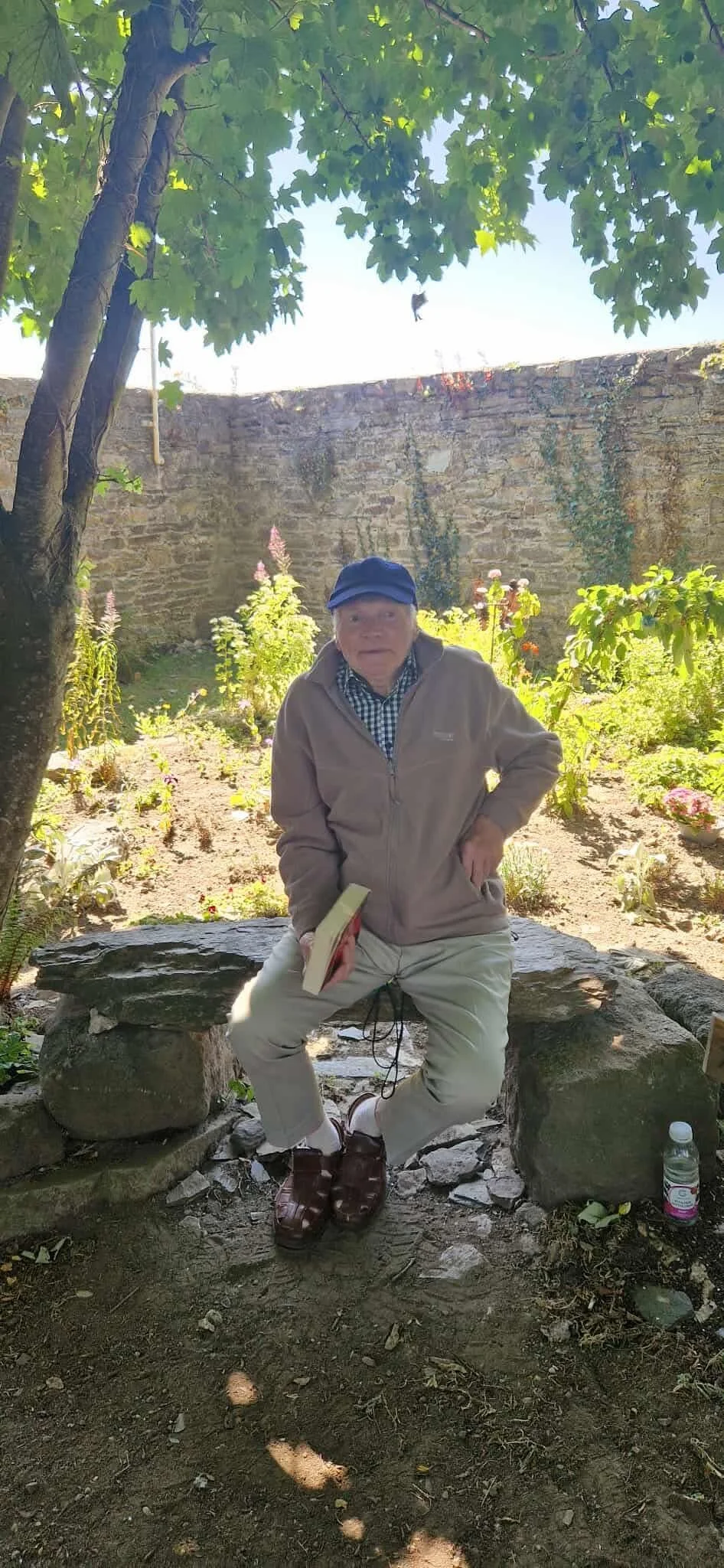
The Dream of a Young Girl and Her Grandfather
For centuries, the ruined church and graveyard at Kilbarry stood quietly on the northern outskirts of Waterford City. Beneath ivy, tangled briars, and decades of neglect lies one of the most historically layered sites in the region. Within the wider Kilbarry and Waterford landscape, archaeological evidence and regional surveys indicate long-term human activity stretching back into prehistory, including Bronze Age burial traditions in the broader area, and continuing through Iron Age, Norse and early Christian periods. This wider context places Kilbarry within a landscape that has been repeatedly used, remembered, and reinterpreted across thousands of years.
Over time, this sacred and funerary character became further formalised in the medieval period. The Knights Templar later established a presence here, developing Kilbarry into one of their largest Irish preceptories, with the Knights Hospitaller succeeding them following the suppression of the Order. Even after this transition, the sacred site did not fade from use. It continued as a place of burial and remembrance, later also associated with famine-era interments and continued parish use into more recent centuries. Its meaning has never been fixed, but continuously reshaped by successive generations of the local community.
For many years, however, the site remained overgrown and largely inaccessible. Few could imagine that its modern revival would begin not with institutions or archaeologists, but with the curiosity of a child.
That child was Katie Houlihan.
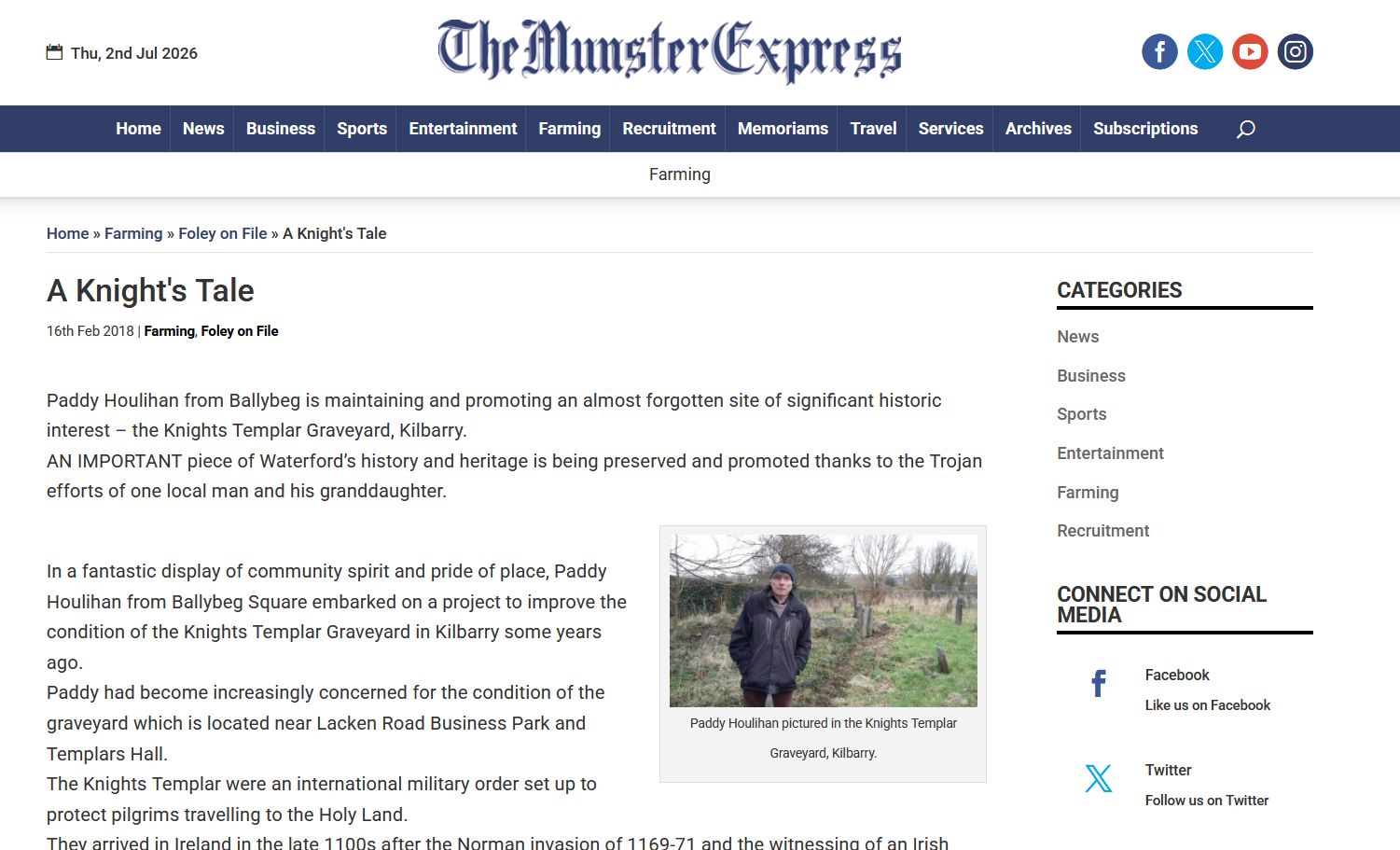
The story began with a school project. As part of her early interest in local history, Katie began researching the forgotten graveyard near her home. What she discovered was a place of deep historical resonance, quietly concealed beneath vegetation but still powerfully present in its atmosphere. Rather than leaving it as an academic exercise, she chose to act. Together with her grandfather, Paddy Houlihan, she made a simple but profound decision: the site deserved to be seen, cared for, and remembered again.
It was an act rooted not in authority, but in attention, care, and belonging.
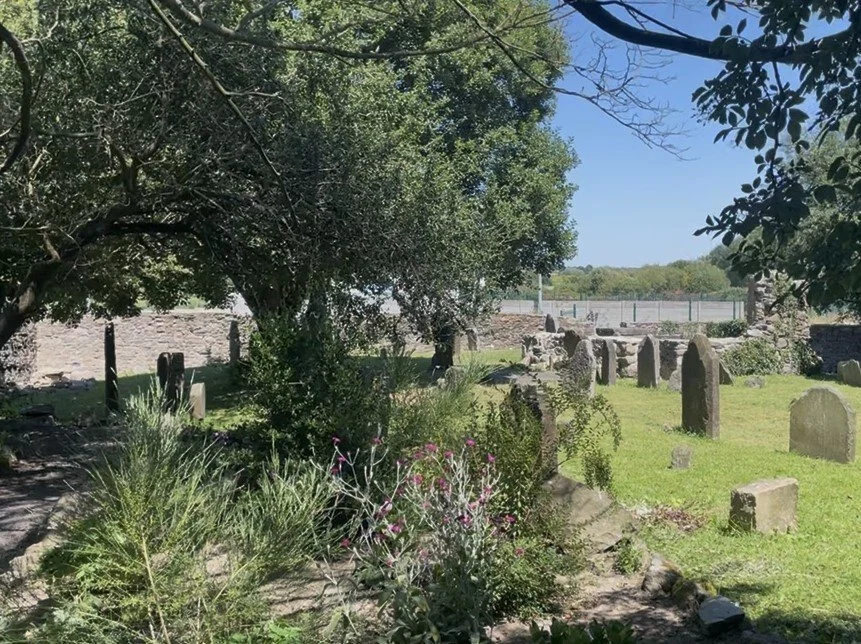
Armed with basic tools and steady determination, Katie and Paddy began the slow work of restoring and maintaining the overgrown gardens and pathways of the graveyard. Ivy was carefully pulled back from trees and boundary walls. Thick undergrowth that had closed off access for decades was gradually cleared. Step by step, pathways reopened, and the landscape slowly became accessible again. What had been hidden for years was gently brought back into care through patient, ongoing maintenance rather than reconstruction or alteration.
What began as a school project soon became something far greater than either of them could have anticipated.
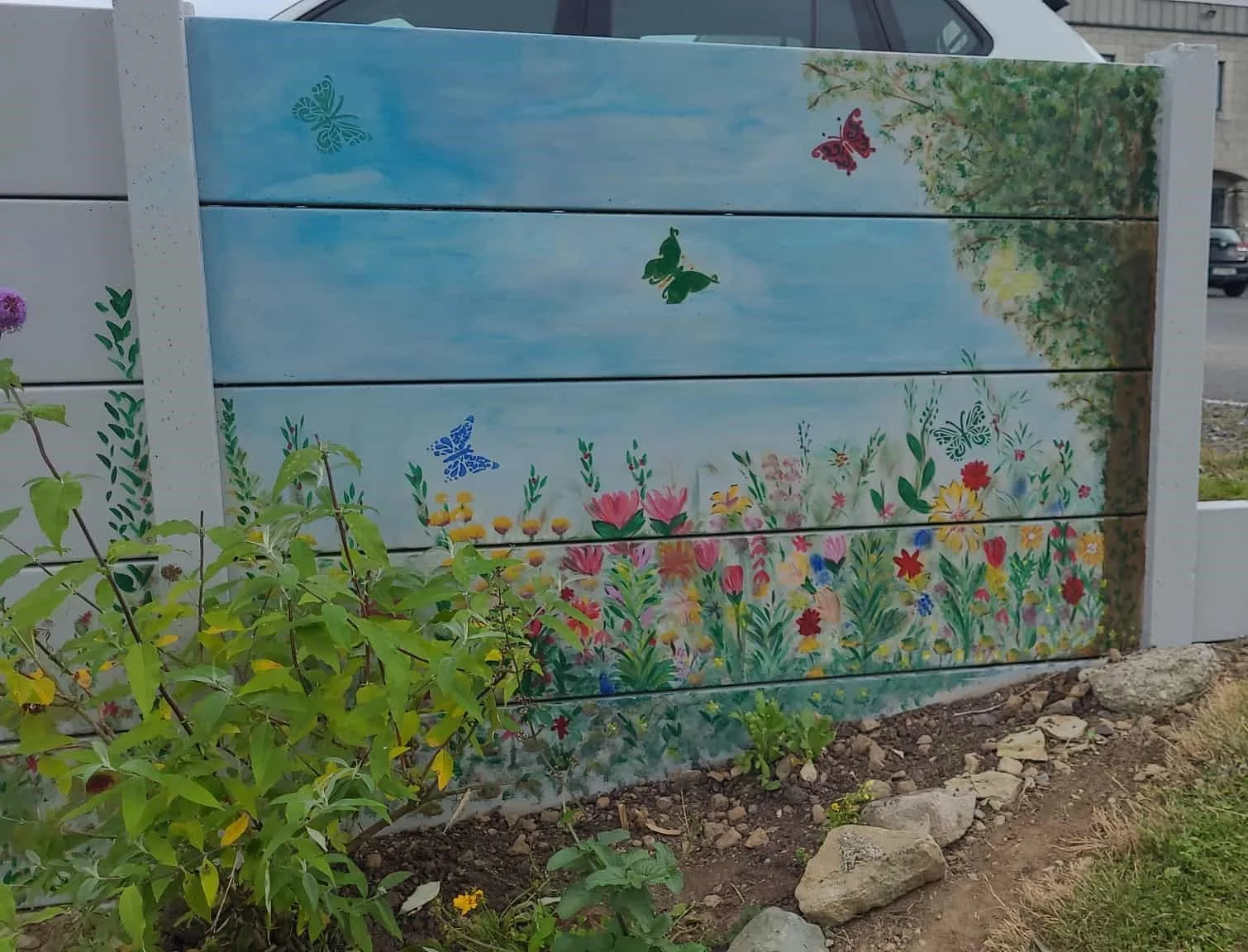
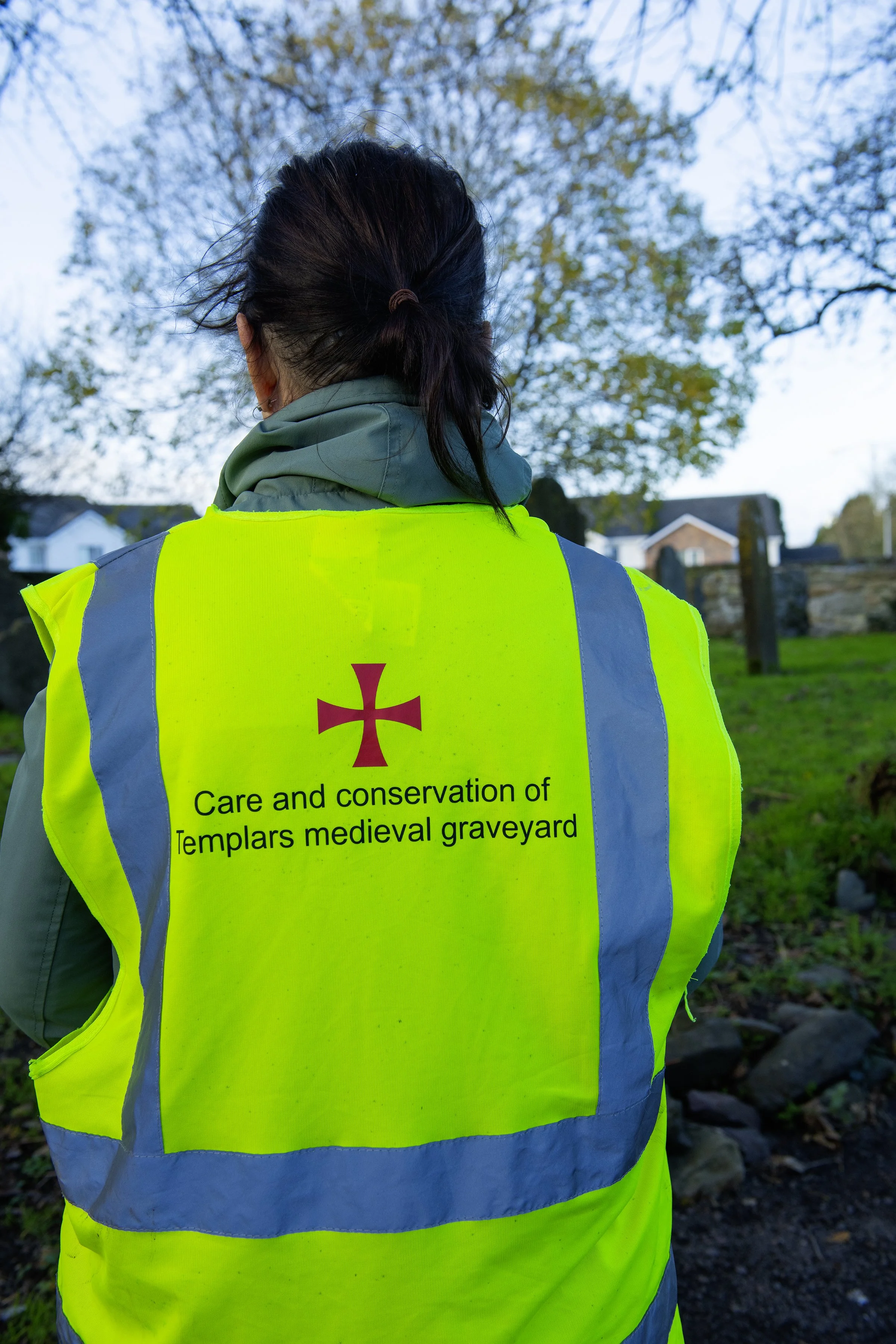
As word spread, others began to join them with veteran volunteer Maggie being the first. Local volunteers offered time, skills, and companionship. What had started as a grandfather and granddaughter working together evolved into a wider community effort, which eventually became known as the Kilbarry Knights Templar Graveyard Restoration Group.
Yet even as it grew, the heart of the story remained unchanged: Katie’s first act of care, and the bond she shared with her grandfather.
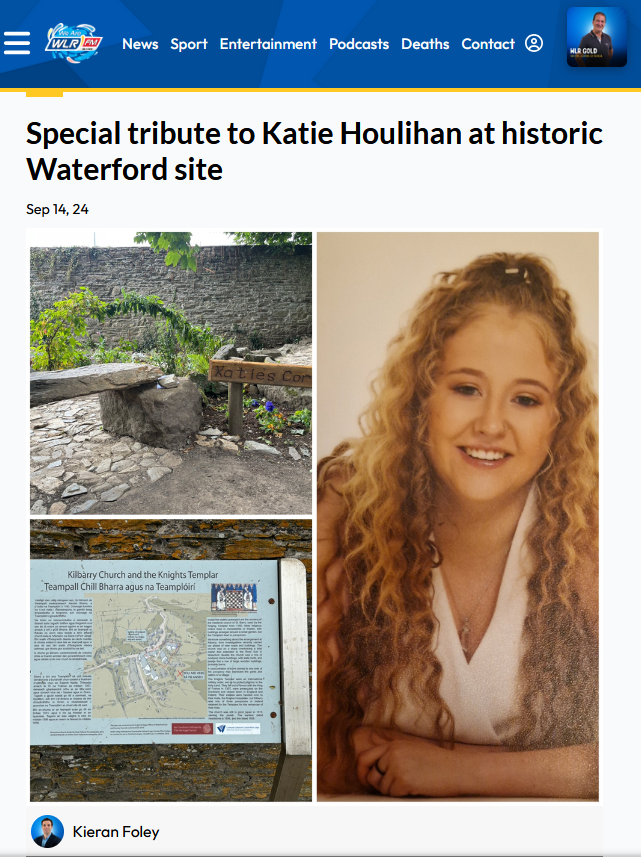
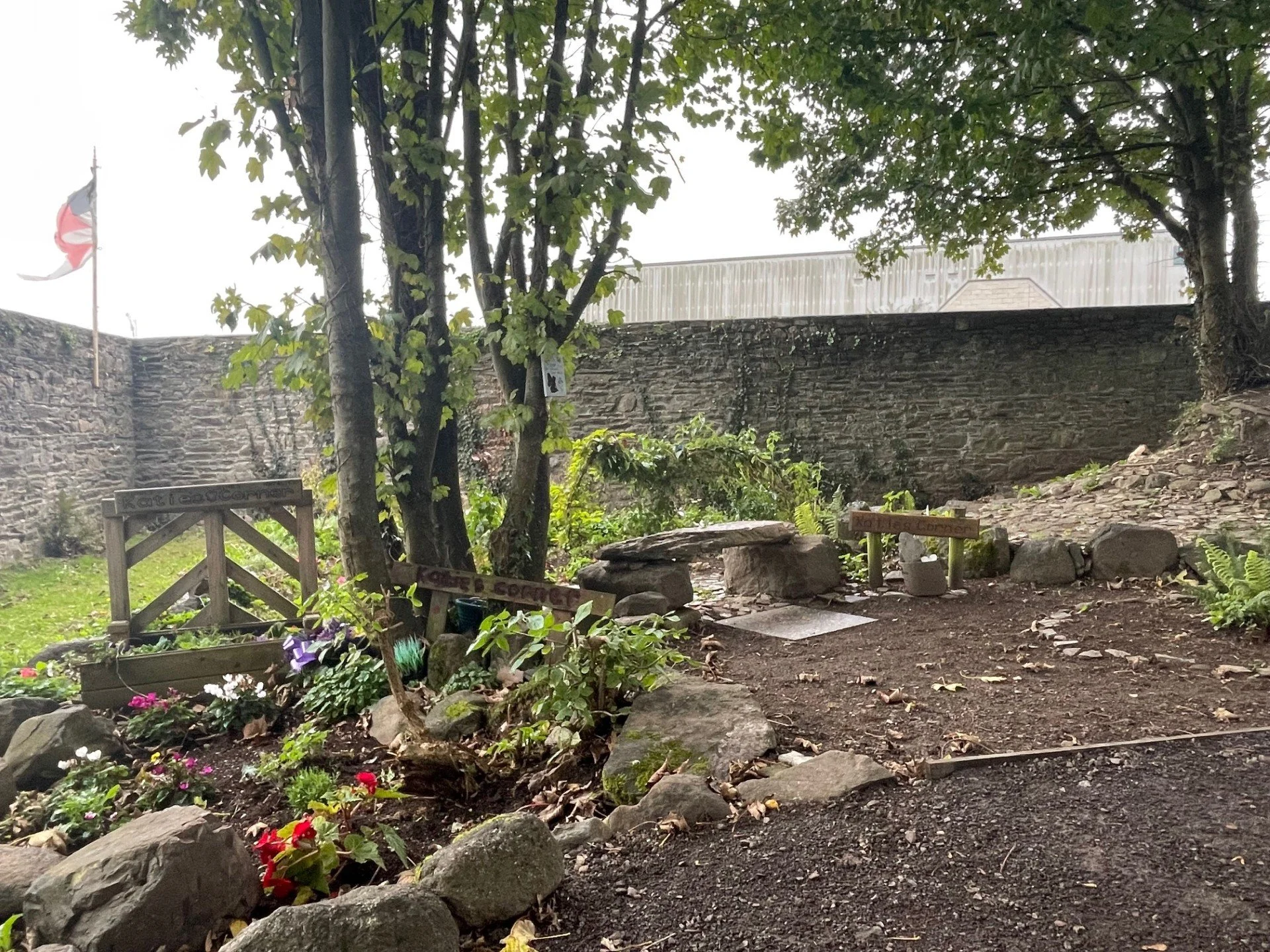
Tragically, Katie Houlihan passed away at the age of 24. Her death was deeply felt by all who knew her and by the wider community connected to Kilbarry. In recognition of her role in the site’s revival, a dedicated memorial space and tribute corner was created within the graveyard. It sits quietly within the landscape she helped bring back into care, ensuring that her presence remains woven into the place she once walked with her grandfather. Visitors today can still encounter this space as part of the living memory of Kilbarry.
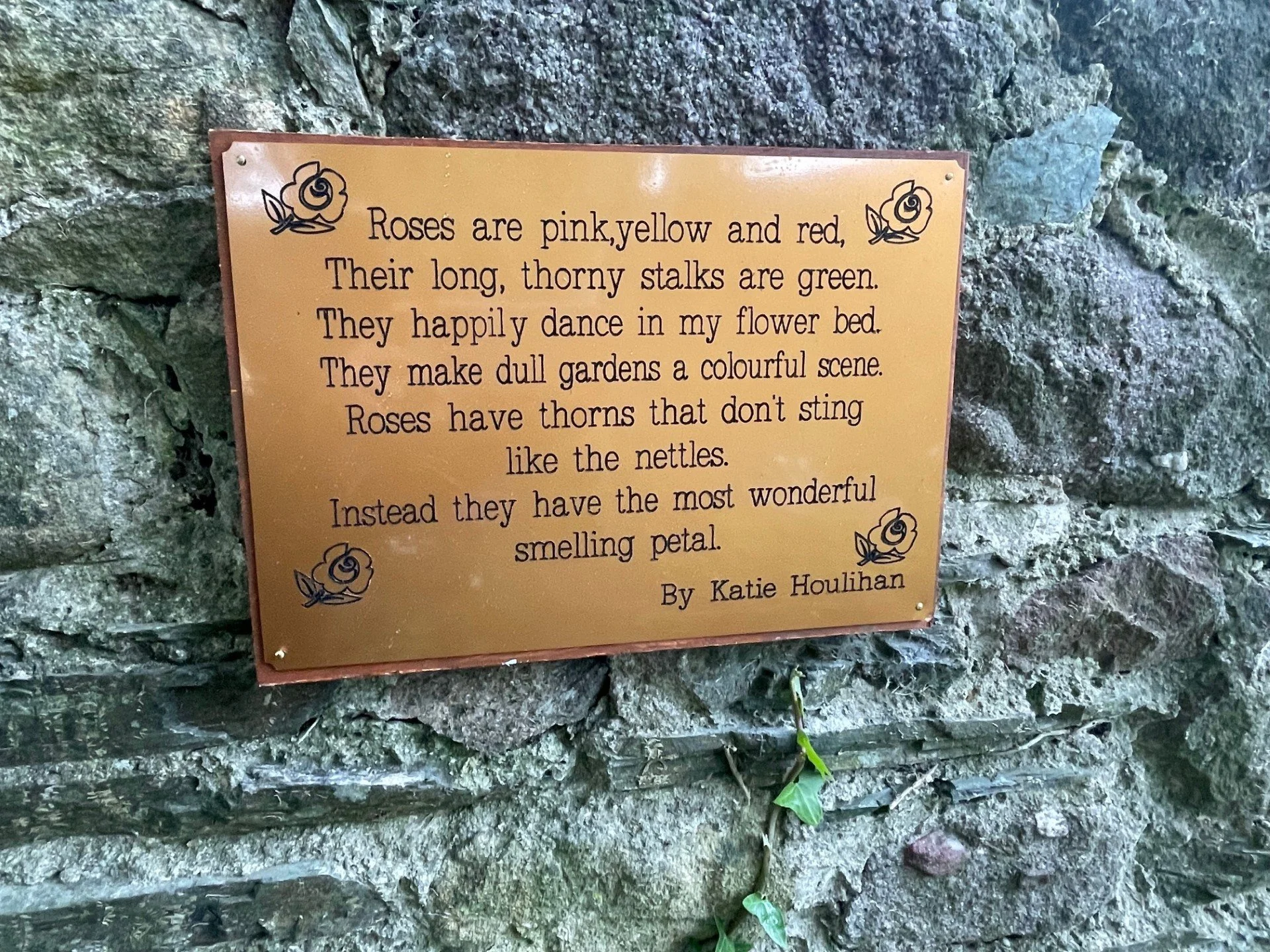
Her absence is deeply felt, but so too is her continuing presence in the story of the site. Above left article on a tribute to Katie in 2024 and right image of “Katie’s Corner” created by Paddy and Katie’s family to honour her. See a poem by Katie below.
Paddy Houlihan has continued that work with remarkable dedication. He remains a constant presence at Kilbarry, maintaining the site alongside volunteers and generously sharing its history with researchers, historians, and visitors. In my own case, he has always been unfailingly kind and generous with his time, meeting with me on multiple occasions during my MA in Public History and Cultural Heritage, where my dissertation focused on the Knights Templar in Ireland.
His openness, his support for academic research, and his lived connection to the site made a lasting impact on my work. Kilbarry was included in my dissertation not only as a case study, but as an example of how local memory, lived experience, and historical research can come together in a single landscape.
Because of this ongoing community-led stewardship, and the remarkable efforts of Paddy, Katie, and the volunteers, Kilbarry became a central example in my research of what grassroots heritage care can achieve. It demonstrates that heritage is not only preserved through institutions, but also through commitment, continuity, and personal care.
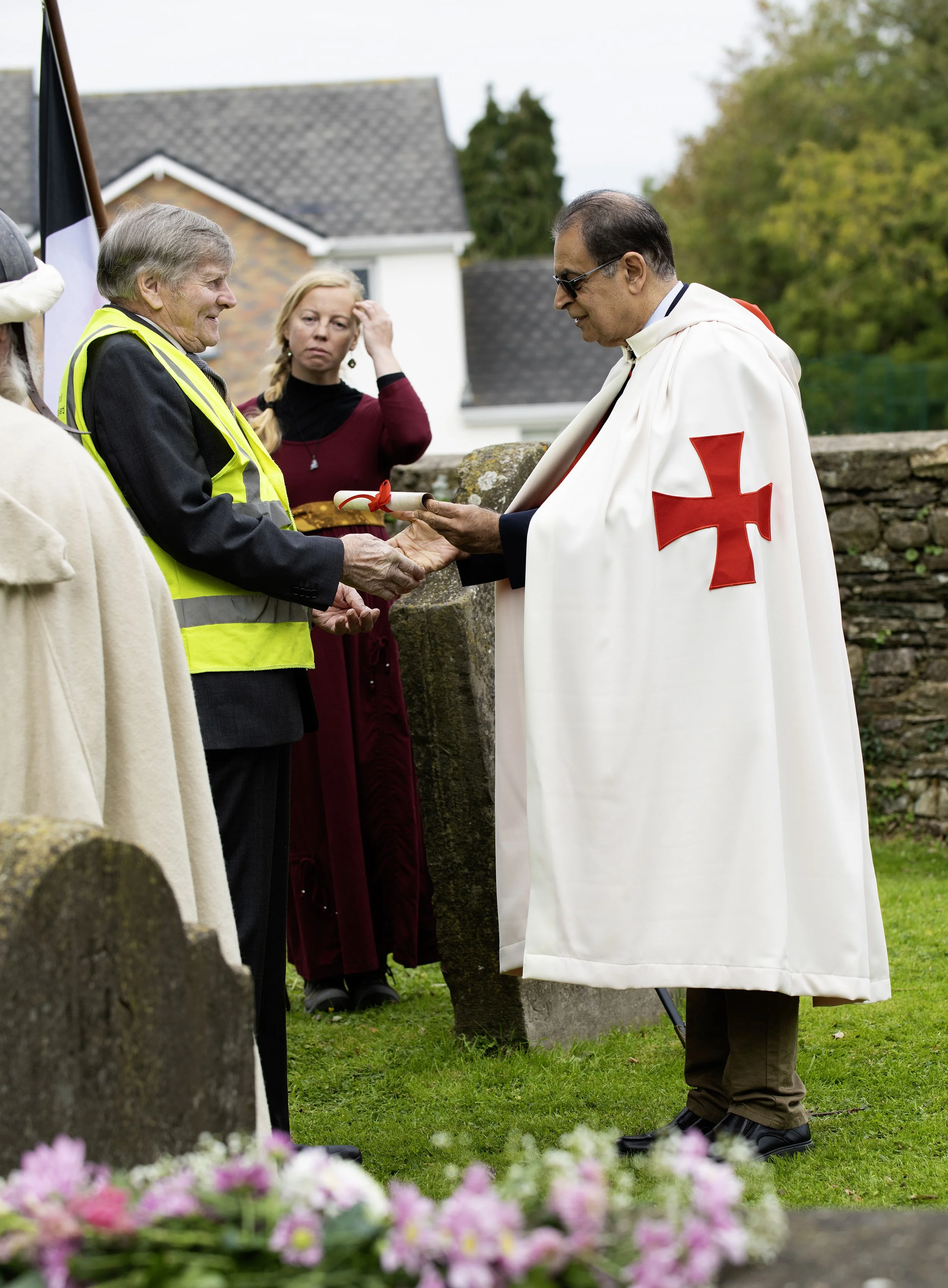
This recognition extended beyond academic work. Following an interfaith service I organised at Kilbarry Knights Templar Graveyard—held as part of Ireland’s first public history event of its kind, “Waterford Templar Historical Day,” which took place on the weekend preceding the anniversary of the arrest of the Knights Templar in France on Friday 13th, 1307—I approached the Irish branch of leading modern Templar order OSMTH to request they issue a certificate of recognition acknowledging the work of Paddy Houlihan, the legacy of Katie Houlihan, and the wider volunteer group. I also asked them to personally give the certificate to Paddy on the day, who has become very dear to me, see the moment where he received it below during the interfaith service at Kilbarry Knights Graveyard as part of “Waterford Templar Historical Day” on Saturday 11 October 2025. OSMTH Ireland who attended and supported the event pleasantly surprised me by also issuing a certificate to me recognising my contribution to advancing Templar historiography in Ireland and my work in Templar public history and heritage interpretation.
In parallel, previously unrecorded archaeology found by the volunteers but which I identified during my engagement with the site and its wider landscape and later formally reported has since then been acknowledged by Ireland’s National Monuments Service and assigned SMR entries. These records include both the assigned reference numbers and me as the named identifier and reporter. This confirmation validated the observations I made in the field included in my MA dissertation and represents an important contribution to the formal archaeological record of the site, helping to clarify Kilbarry’s position within a far wider and deeply layered historic landscape.
What makes Kilbarry especially significant is not only its medieval past, but the way that past continues to exist through living relationships in the present:
Public history increasingly recognises that heritage is not only preserved by institutions, but also shaped by the people who live alongside it. Kilbarry is a clear example of this. Without Katie Houlihan’s early curiosity and her grandfather’s support, much of the site would likely have remained hidden beneath overgrowth. Without the continued care of Paddy and the volunteers, it might have quietly returned to neglect.
Instead, it has become a place of shared responsibility and quiet continuity.
As the gardens and pathways were gradually restored, the site became accessible once more. Boundaries were reopened through care, and the landscape regained a sense of structure and presence. These efforts have helped deepen understanding of Kilbarry’s long and complex history, from its possible prehistoric and early historic significance through its early Christian, Norse, medieval Templar and Hospitaller phases, and into its later use as a burial ground for local families, including famine-era interments and more recent community burials.
Just as importantly, Kilbarry has become a place where memory, landscape, and community care meet in a living way. Volunteers do not simply maintain the gardens of a graveyard; they sustain a landscape of remembrance and belonging.
This reflects a wider shift in heritage thinking, where historic sites are understood not as static remains of the past, but as living landscapes shaped continuously by human presence.
Kilbarry embodies this continuity.
For thousands of years, this landscape has carried layers of meaning. Long before the arrival of the military orders, it formed part of a wider sacred geography where burial and ritual activity were already present. The Knights Templar later formalised its use as a preceptory while re-purposing the earlier church and adding to it, which was re-baptised to St. Antoine; this was followed by more building additions by the Knights Hospitaller. Even after their departure, the church remained active until the 1600s; the most recent clearly documented historic burial evidence in Kilbarry Knights Templar Graveyard dates from the mid-19th century (c. 1856), after which it is generally understood to have ceased functioning as an active formal burial ground, its meaning evolving through continued burial and remembrance by the local community across generations.
Today, another chapter has been added.
The volunteers who continue to care for Kilbarry are not only preserving access and landscape. They are sustaining memory, identity, and continuity. Every cleared path, every restored garden edge, and every act of care contributes to the ongoing life of the site.
At the centre of this story remains a simple beginning.
A young girl, her grandfather, a school project, and a decision to care about a forgotten place.
From that moment grew a restoration effort, a community initiative, and a living example of what can happen when heritage is not only studied, but lived and carried forward.
Few visitors today realise that the modern revival of Kilbarry did not begin with institutions or excavation.
It began with Katie Houlihan’s belief that an ancient graveyard was worth saving.
And that belief continues to be felt in every path, every garden, and every quiet moment of care within the site today.
Building on this foundation, my intention is to preserve and share the history and archaeology of Kilbarry as I have reconstructed it through research, field engagement, and the identification of previously unrecorded archaeological features. My aim is to present the site not only as a restored landscape, but as an outdoor participatory “living museum,” where its layered history can be experienced in situ. In doing so, I hope to inspire other communities to recognise the value of neglected or overgrown historic sites, and to see how careful, respectful community-led stewardship can bring such places back into meaningful use, understanding, and care.
Helena B. Scott
-
Kilbarry: Ancient Sacred Site & Templar Preceptory, Church and Cemetery
HISTORY
-
The Dream of a Young Girl and Her Grandfather
How Kilbarry Knights Templar Graveyard was saved by a school project begun by a 10 year old girl named Katie Houlihan with her grandfather Paddy Houlihan.
-

A Community Participatory Outdoor Museum
-

Step Back In Time
SELF-GUIDED AUDIO TOUR
-
An Authentic Templar Garden
-
Maggie Moody's Butterfly Wall
REMEMBRANCE
-
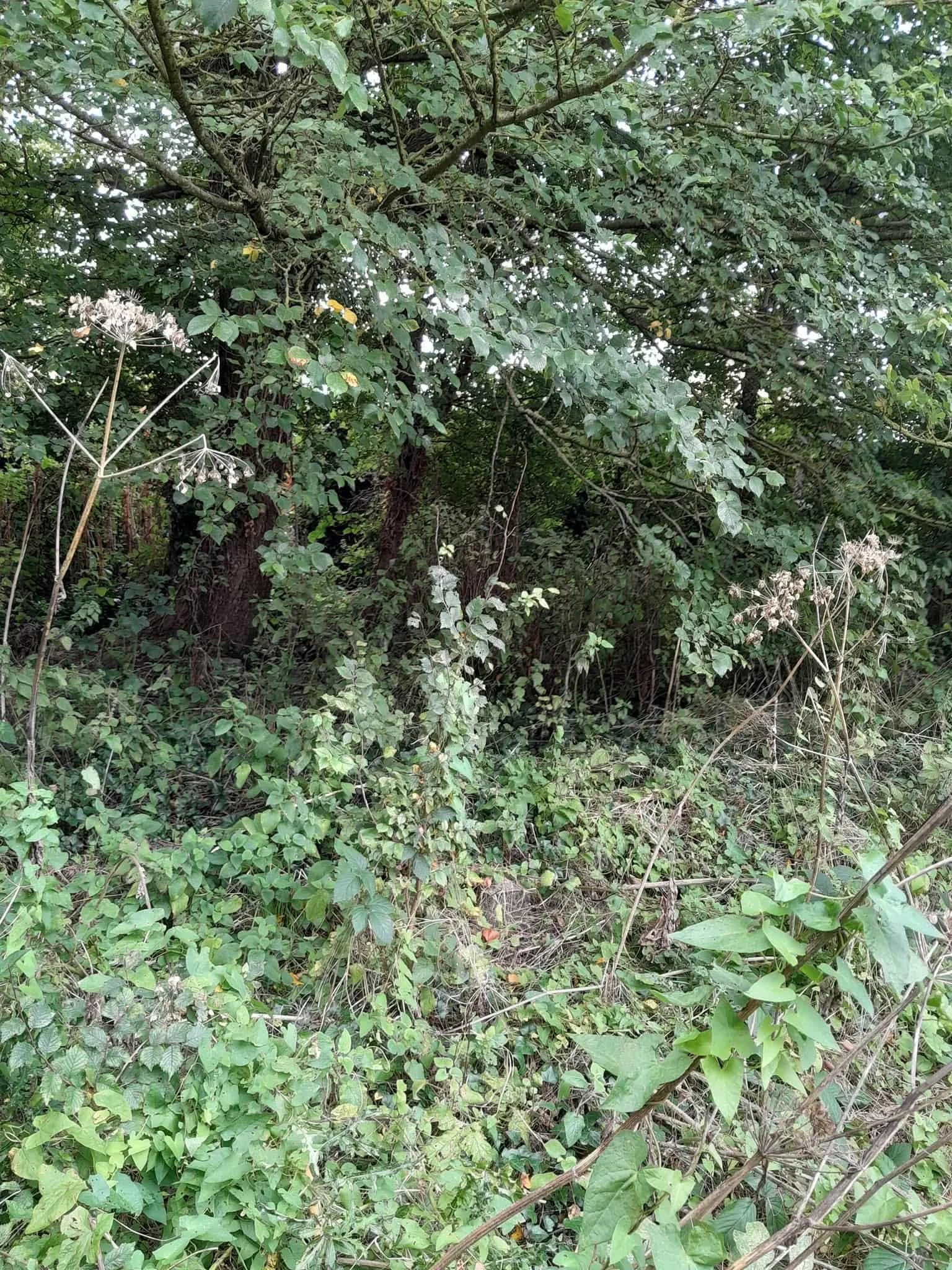
Photo Timeline
An illustrative photo time-line of the early day’s of Kilbarry Knights Templar cemetery gardens restoration
-
Kilbarry Knights Templar Graveyard Project
-
Virtual Katie's Corner

VIRTUAL WELL OF MEMORIES
Welcome to our “Virtual Well of Memories”, a living archive where you can share memories, names, photos, or reflections associated with the cemetery or the Templars. Along with the locals, you are invited to pin your own sticky here (click on image) —a message, a memory, or a hope to share with others. Together, these voices turn Kilbarry into a shared site of memory, keeping connections alive across time.
This practice follows the vision of Nina Simon’s participatory museum, which emphasizes that cultural spaces become most powerful when communities help create their meaning. As Simon reminds us: “Participation is not about technology—it’s about inviting people to be part of something bigger than themselves.” By leaving your words here, you help weave a collective story around Kilbarry—one that is not just preserved, but lived.
© 2025 Helena B. Scott. All rights reserved.