
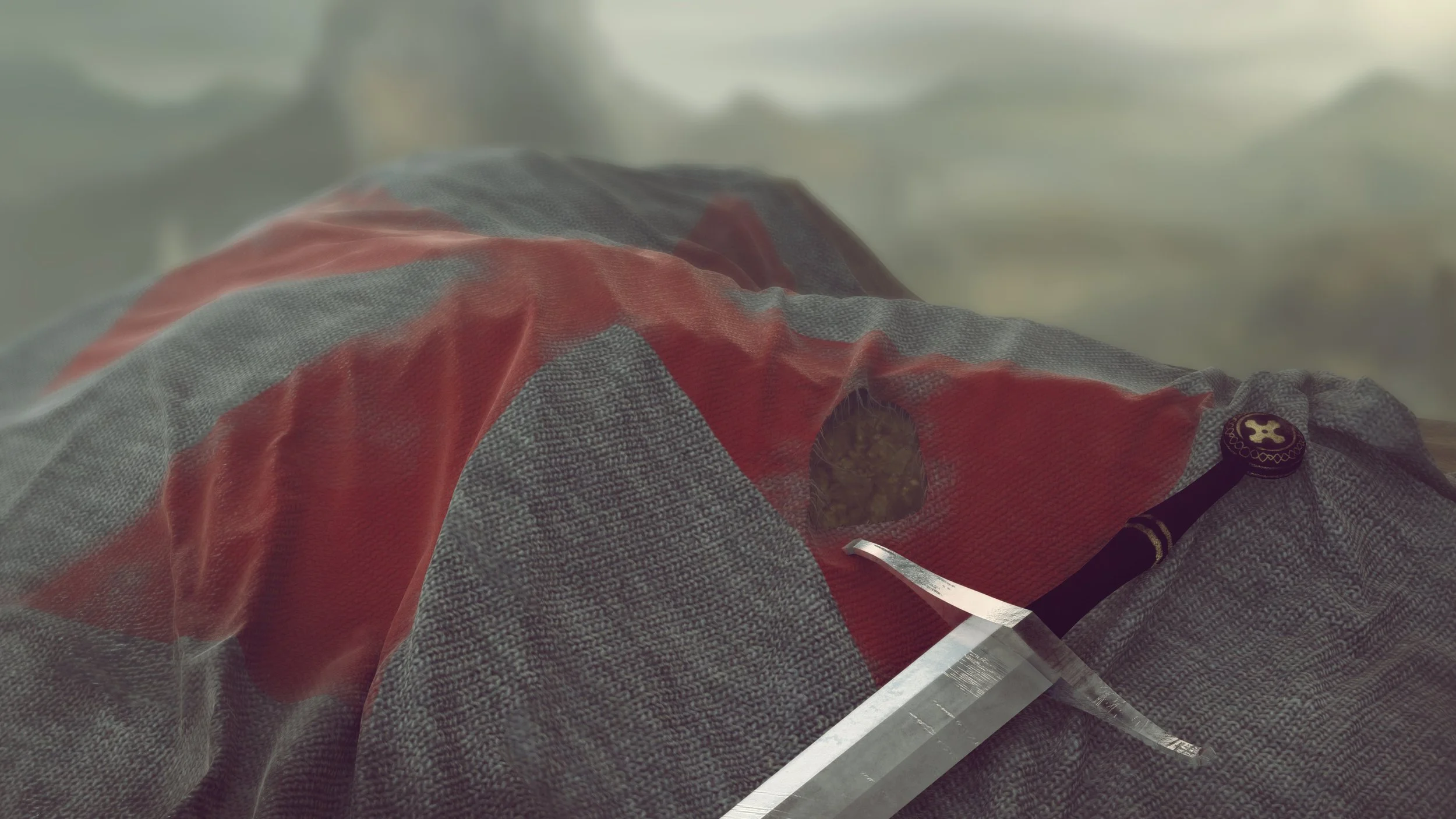
Kilbarry is more than a resting place.
It is the echo of vows kept across borders, of knights who gave their hearts to what they believed was just and true, and of a spiritual order whose memory persists despite persecution and exile—and like the Templars, it refuses to fade, living on in the hearts of those who grew up playing among its gravestones, unaware of its history and untold story, but who later returned to safeguard its legacy for future generations.
Helena B. Scott
Maggie's Butterfly Wall: Where Memory Takes Flight
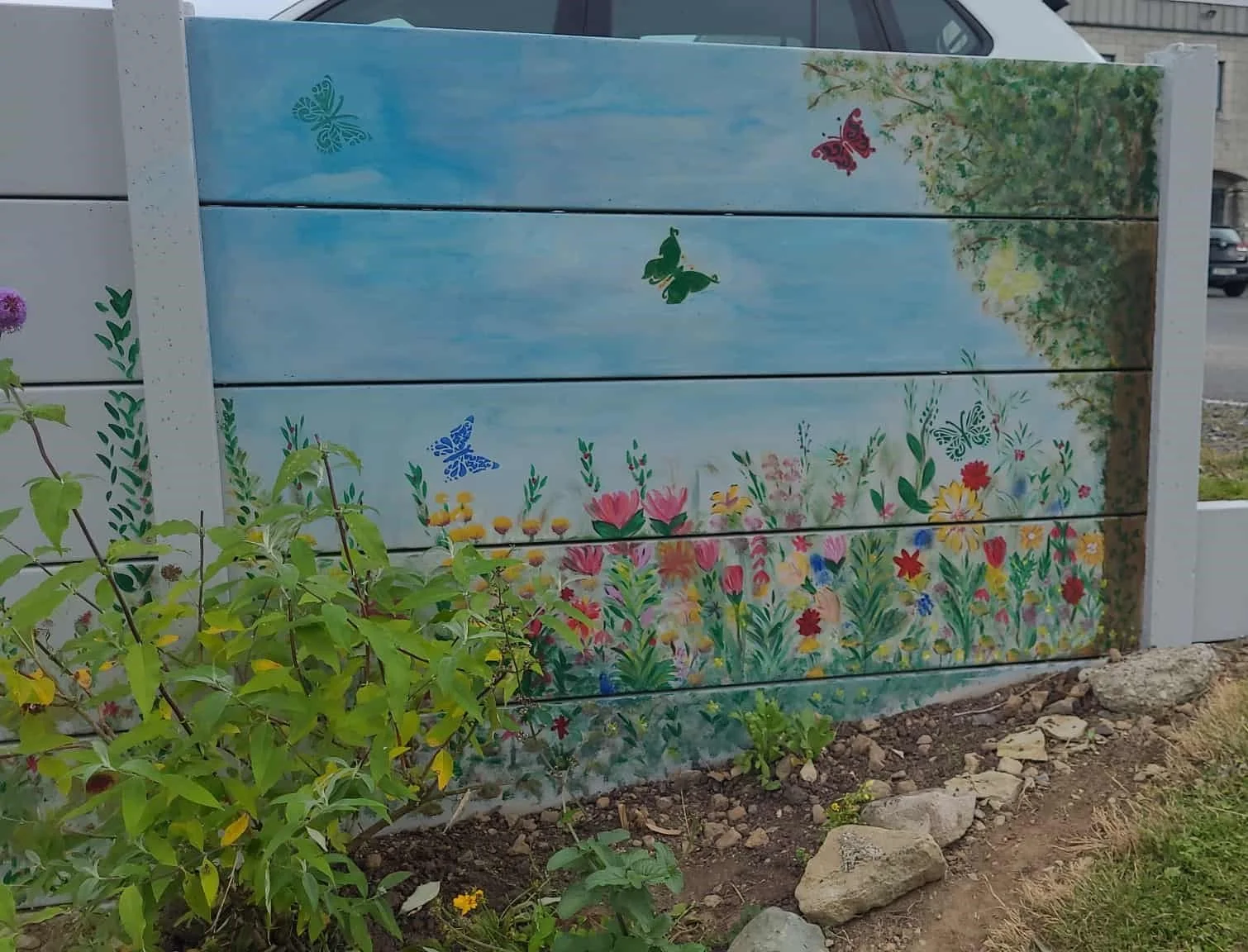
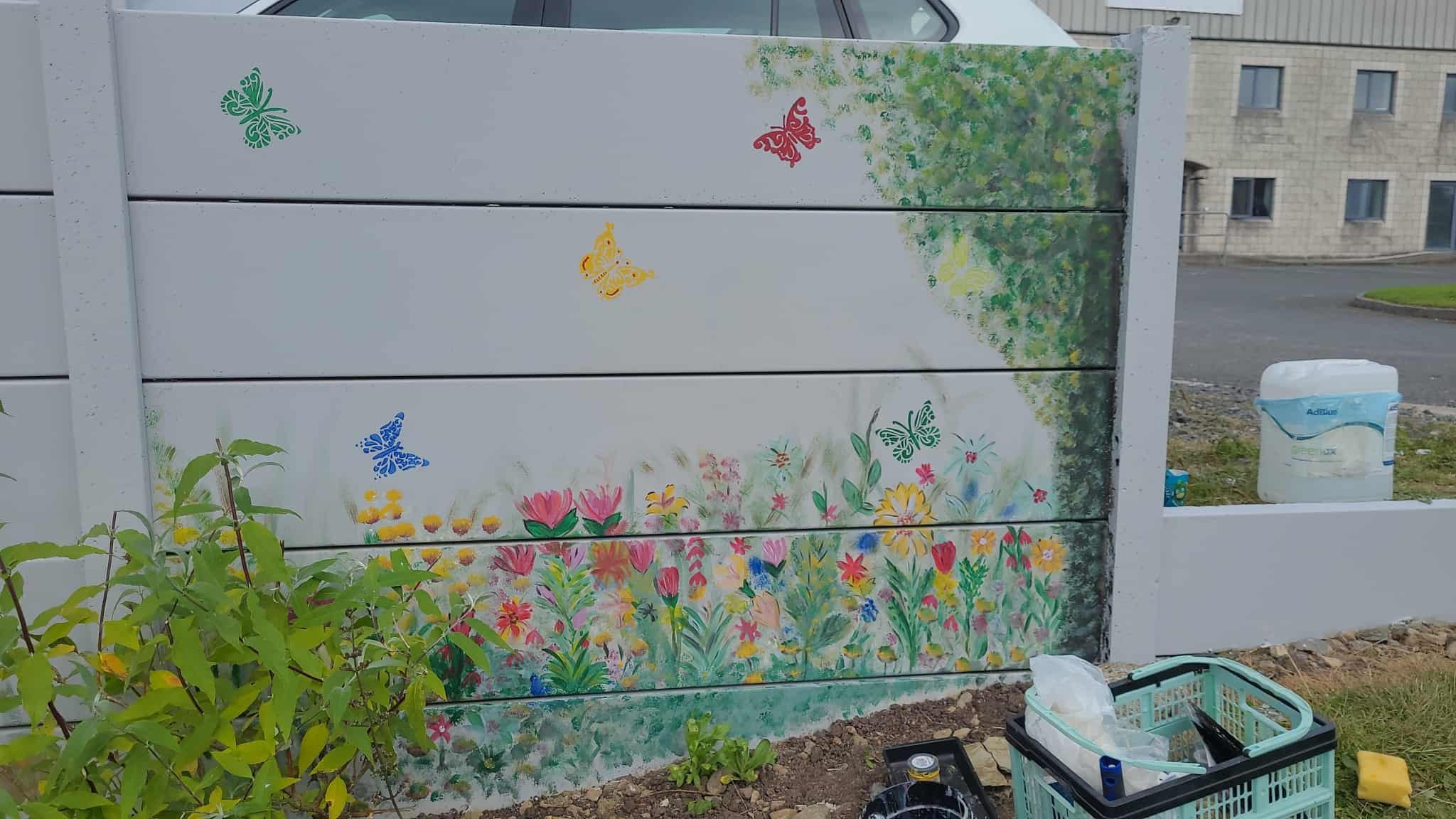
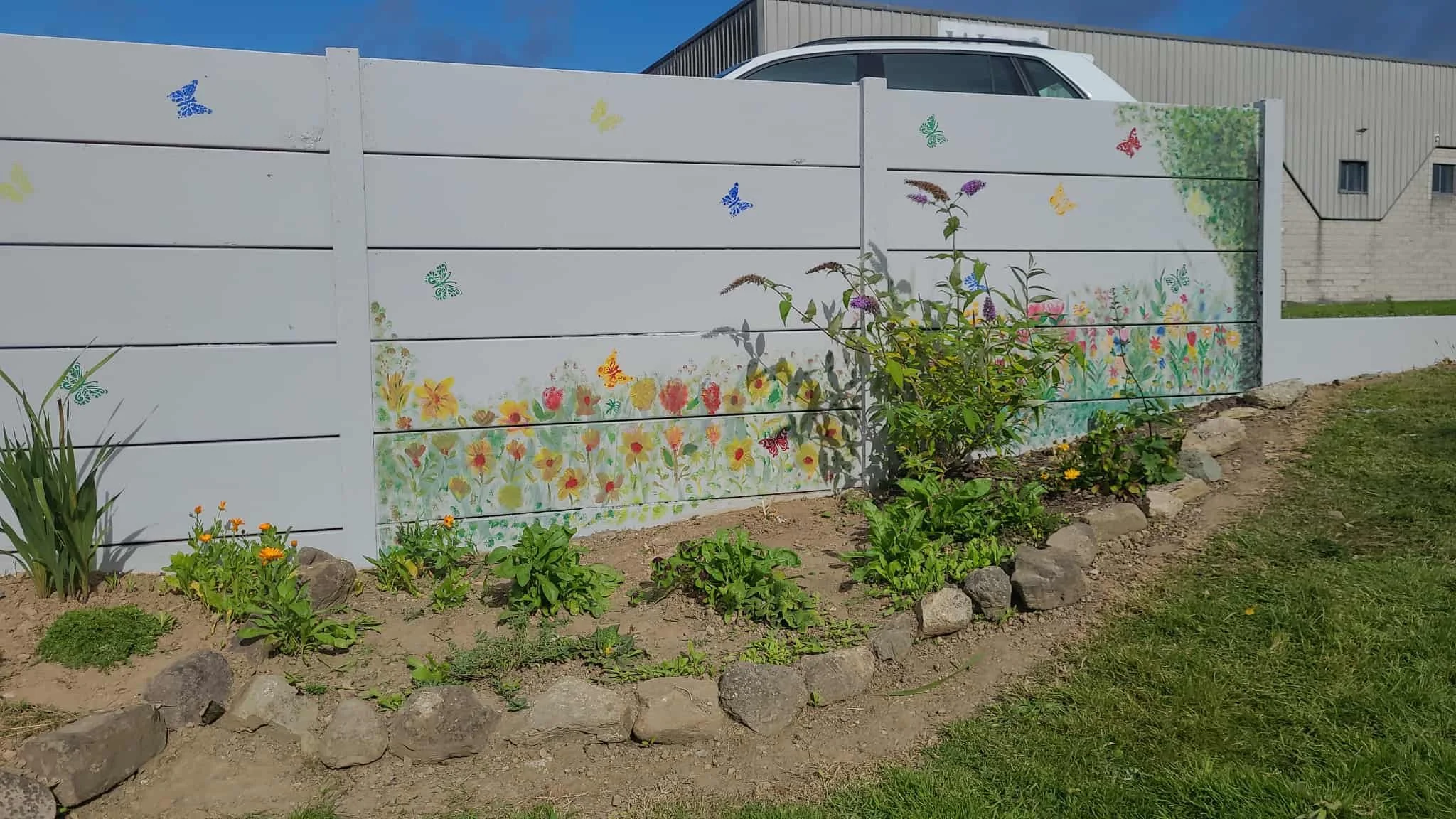
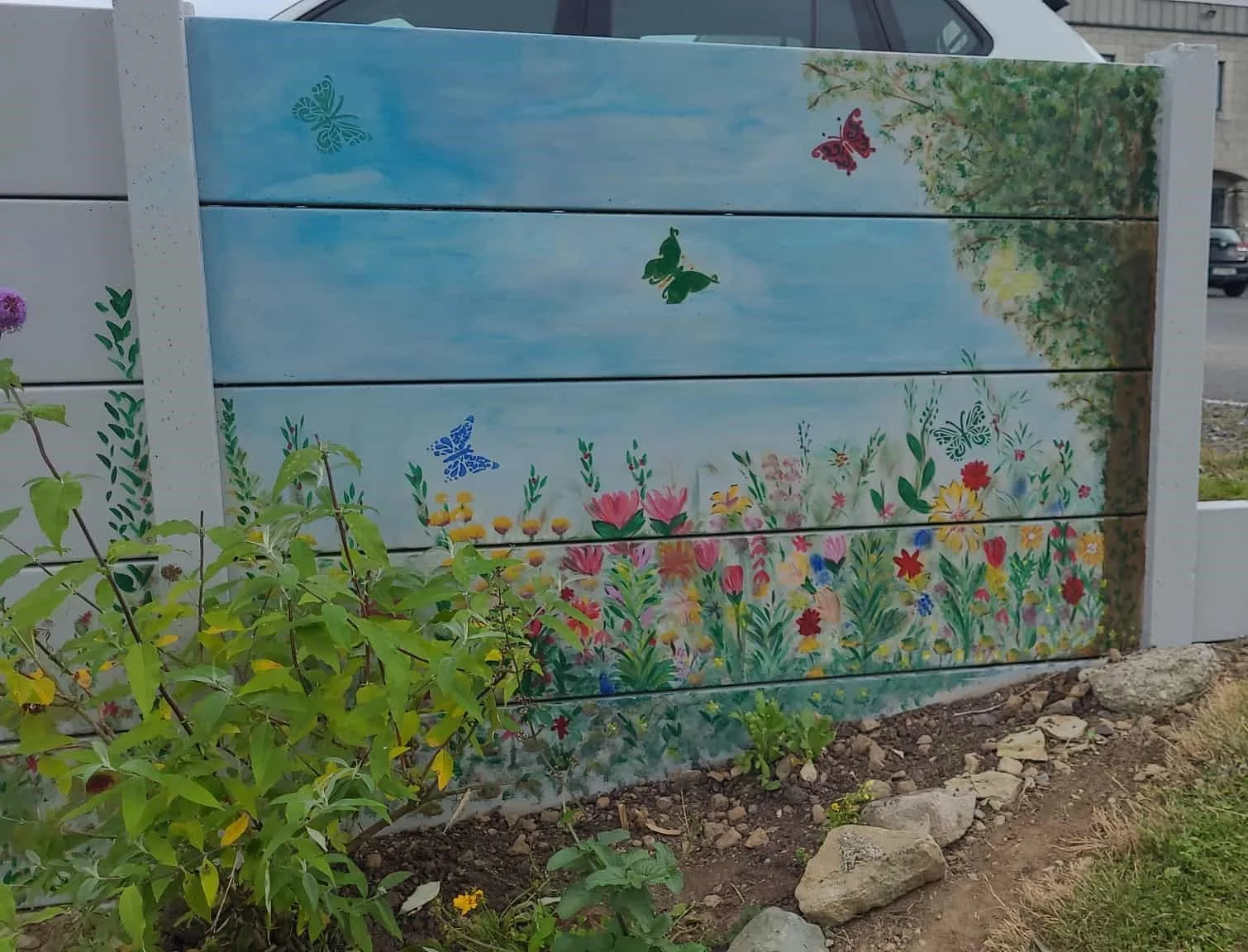
Set beside the young orchard and opposite the ancient stone wall leading to the entrance of Kilbarry Knights Templar Graveyard stands one of the site's most moving and unexpected features. At first glance, Maggie's Butterfly Wall appears to be a colourful display of painted butterflies. Yet behind each butterfly lies a story, a memory, and a life that continues to be remembered through a simple but deeply human act of participation.
Unlike traditional memorials carved in stone, the Butterfly Wall continues to grow with the community it serves. It reminds us that remembrance is not confined to the past; it is something we actively create together.
Long before the arrival of the Knights Templar, Kilbarry was already an ancient sacred landscape. Archaeological evidence reveals human activity from the Bronze and Iron Ages, followed by Norse and Early Christian occupation, suggesting that this hill has served as a place of ritual, worship, burial, and community for well over two thousand years. Later, the Knights Templar expanded the Church of St Barry and rededicated it as the Church of St Antoine before the estate passed into the hands of the Knights Hospitaller following the suppression of the Order in 1312. Through every generation, Kilbarry has remained a place where memory, faith, and community have become intertwined.
Following decades of neglect, the site has once again become a place shaped by the people who care for it. Volunteers have restored not only the landscape but also its role as a place where stories continue to be shared. It is within this spirit of community participation that Maggie's Butterfly Wall found its beginning.
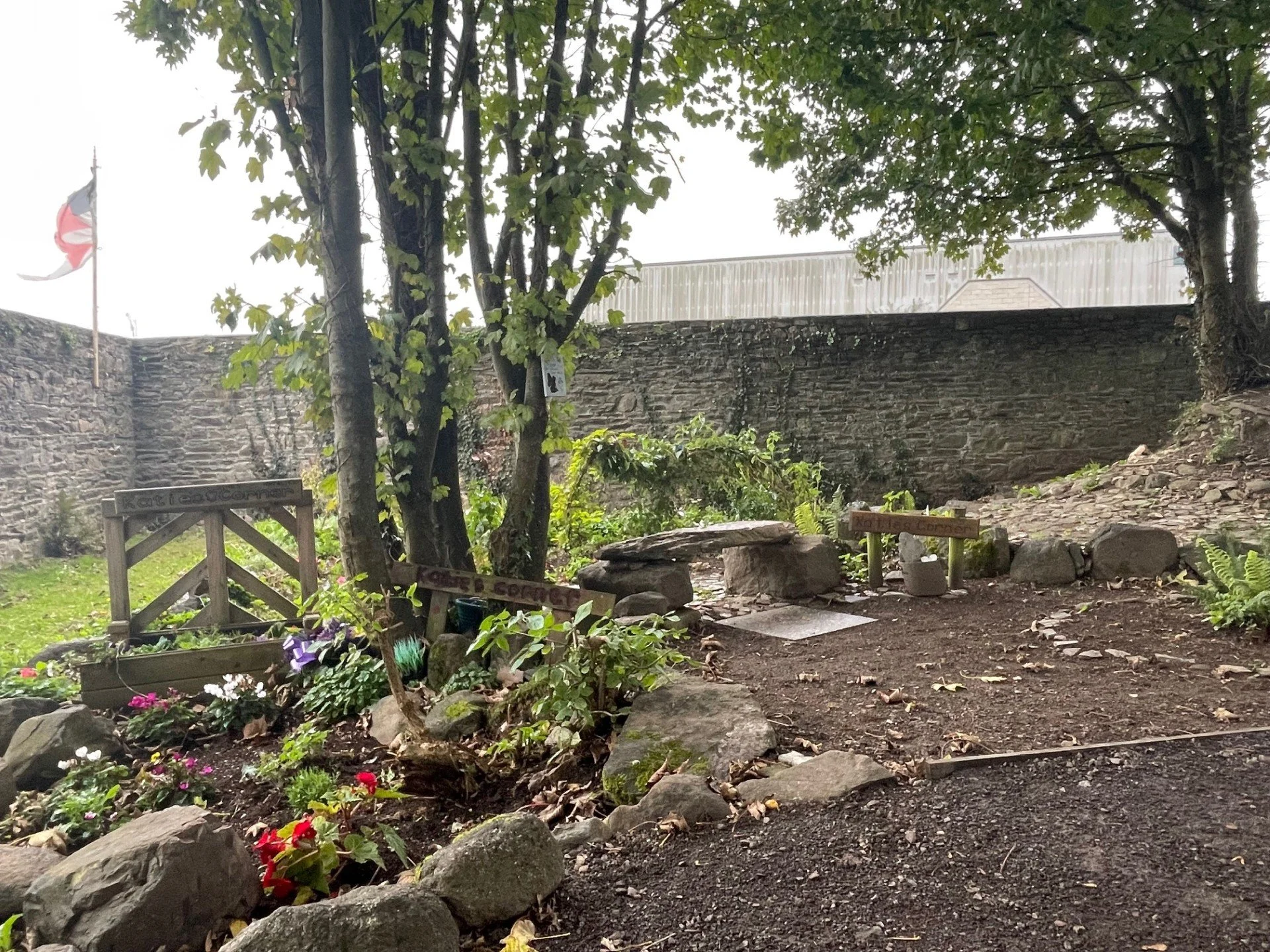
The inspiration came from a deeply personal story. One of the site's volunteers wished to create a place of remembrance for baby Bonnie, whose family found it difficult to visit her grave across town. Instead, they hoped for somewhere closer to home where Bonnie's grandmother could quietly remember her. A small memorial of a white stone and angel was lovingly placed within Kilbarry, joining another deeply personal space within the cemetery—Katie's Corner, created by Paddy Houlihan and family in memory of their beloved granddaughter Katie after her sudden death in a tragic road accident (read more in my article “The Dream of a Young Girl and Her Grandfather”).
As more visitors expressed a desire to remember family members and friends within the peaceful surroundings of Kilbarry, it became clear that the historic cemetery itself could not accommodate additional memorials. Rather than allowing this need to go unanswered, Maggie imagined another way.
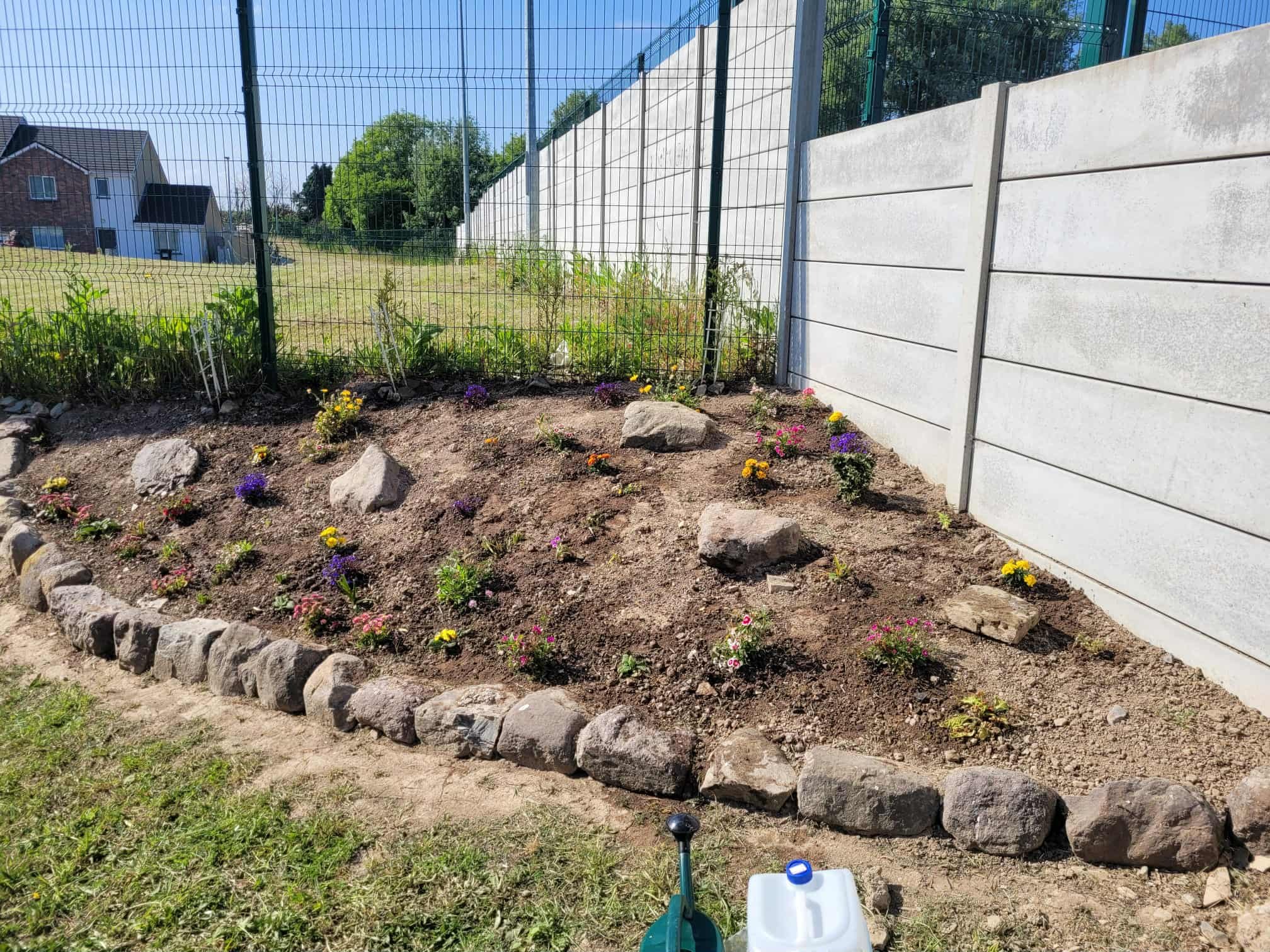
Inspired not by permanence but by participation, she created the Butterfly Wall (below) beside an area that has since been transformed into a flourishing orchard. Planted with a variety of fruit trees reminiscent of those that would once have sustained one of the largest Templar estates in medieval Ireland, the orchard offers a living echo of Kilbarry's past. Just as the land once nourished those who lived—and even those held in captivity during the Templars' long proceedings—it now nourishes wildlife, the local community, and the enduring memory of all who have passed through this sacred place.
Beginnings of the beautiful butterfly wall created by Maggie Moody at Kilbarry Knights Templar Graveyard
Each butterfly offers families a place to write the name of someone they wish to remember. Alongside these memorial butterflies, children are invited to paint their own, transforming the wall into an ever-evolving tapestry of remembrance, creativity, and hope. In doing so, the wall gently dissolves the boundaries between heritage, art, memory, and community.
This beautifully reflects the philosophy of museum scholar Nina Simon, who argues that museums should not simply present history to passive audiences but should "invite users to create, remix, and contribute," transforming visitors into participants. Maggie's Butterfly Wall embodies this idea perfectly. Here, people do not merely observe heritage; they become part of it.
Each butterfly becomes a small act of remembrance, while collectively they tell a much larger story: that grief shared within a community becomes remembrance, and remembrance becomes heritage.
There is perhaps no more fitting symbol than the butterfly itself. Across many cultures, butterflies have long represented transformation, hope, renewal, and the enduring presence of those we have loved and lost. At Kilbarry, they remind us of a simple but profound truth: every life, regardless of age or circumstance, deserves to be remembered. Every visitor is invited to leave something of themselves behind.
In this way, Maggie's Butterfly Wall has become far more than an art installation or memorial. It is a living expression of what Kilbarry has always been across thousands of years; a sacred place where community gathers to remember, to mourn, to create, and ultimately, to ensure that those we love are never forgotten.
Heritage is not preserved by stone alone. It survives because ordinary people choose to remember, to care, and to leave behind acts of love that become part of a place's story. — Helena B. Scott
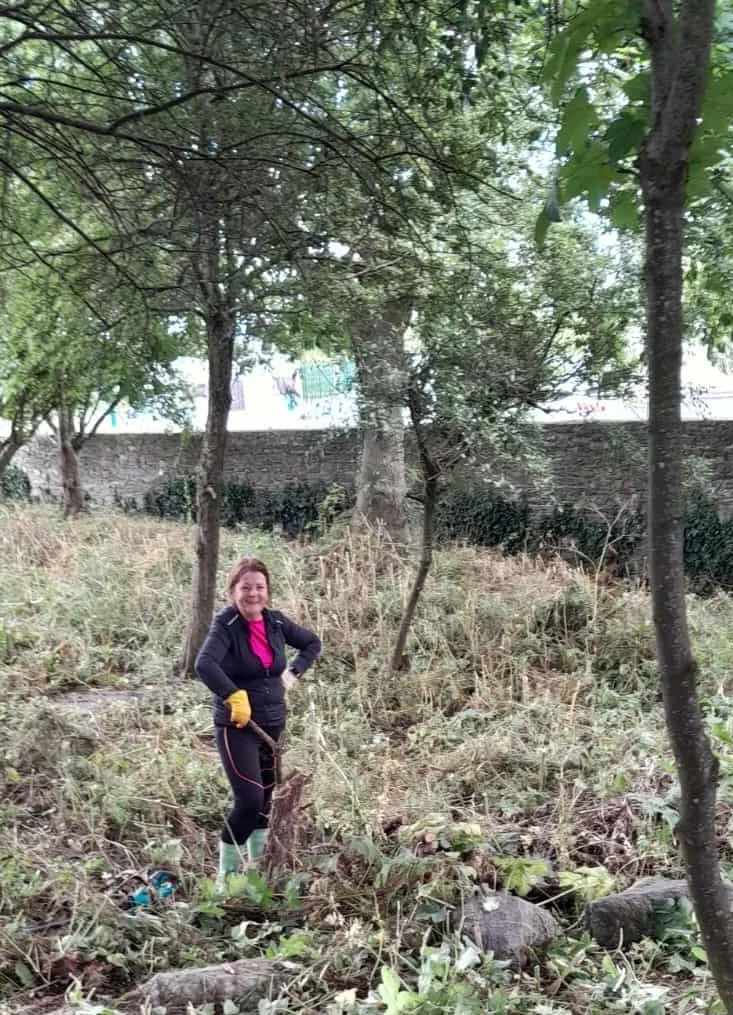
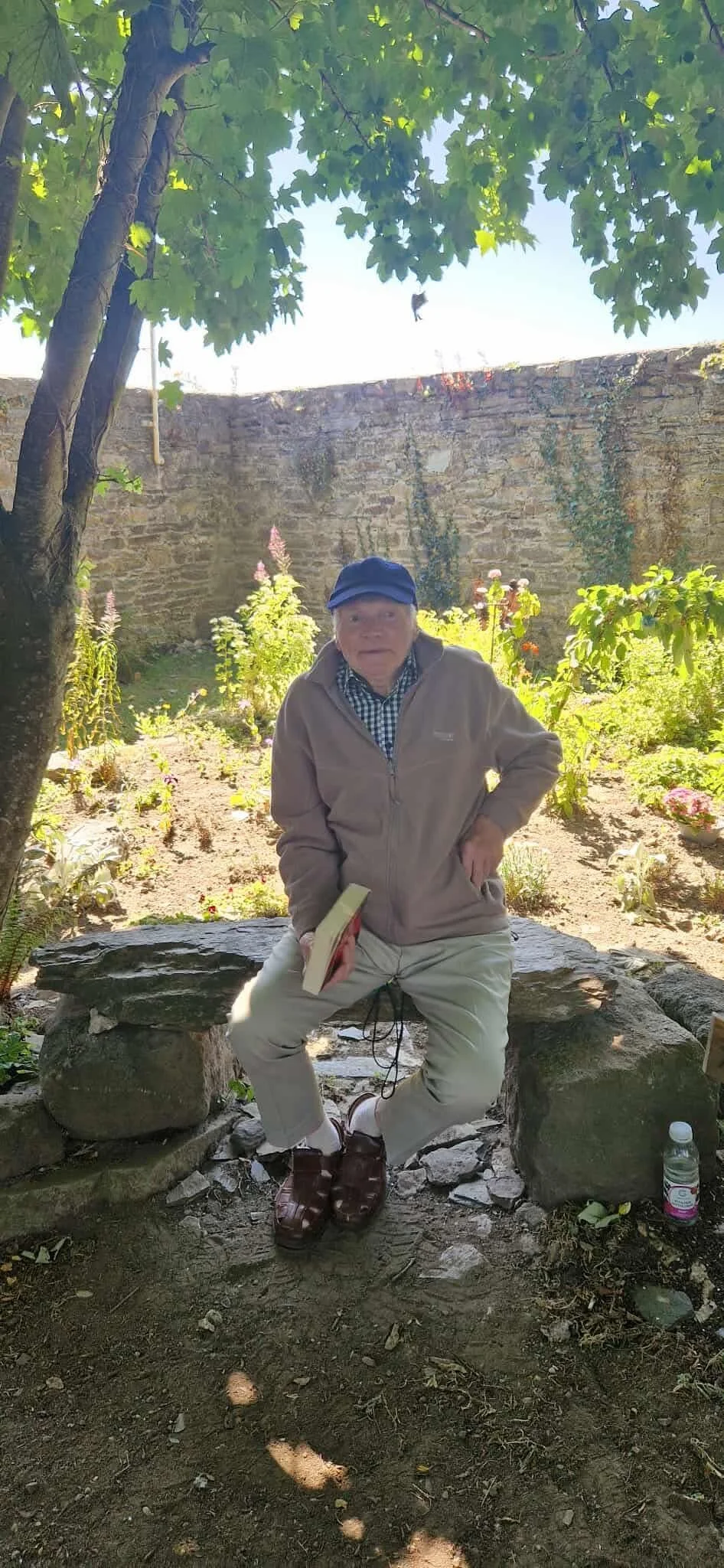
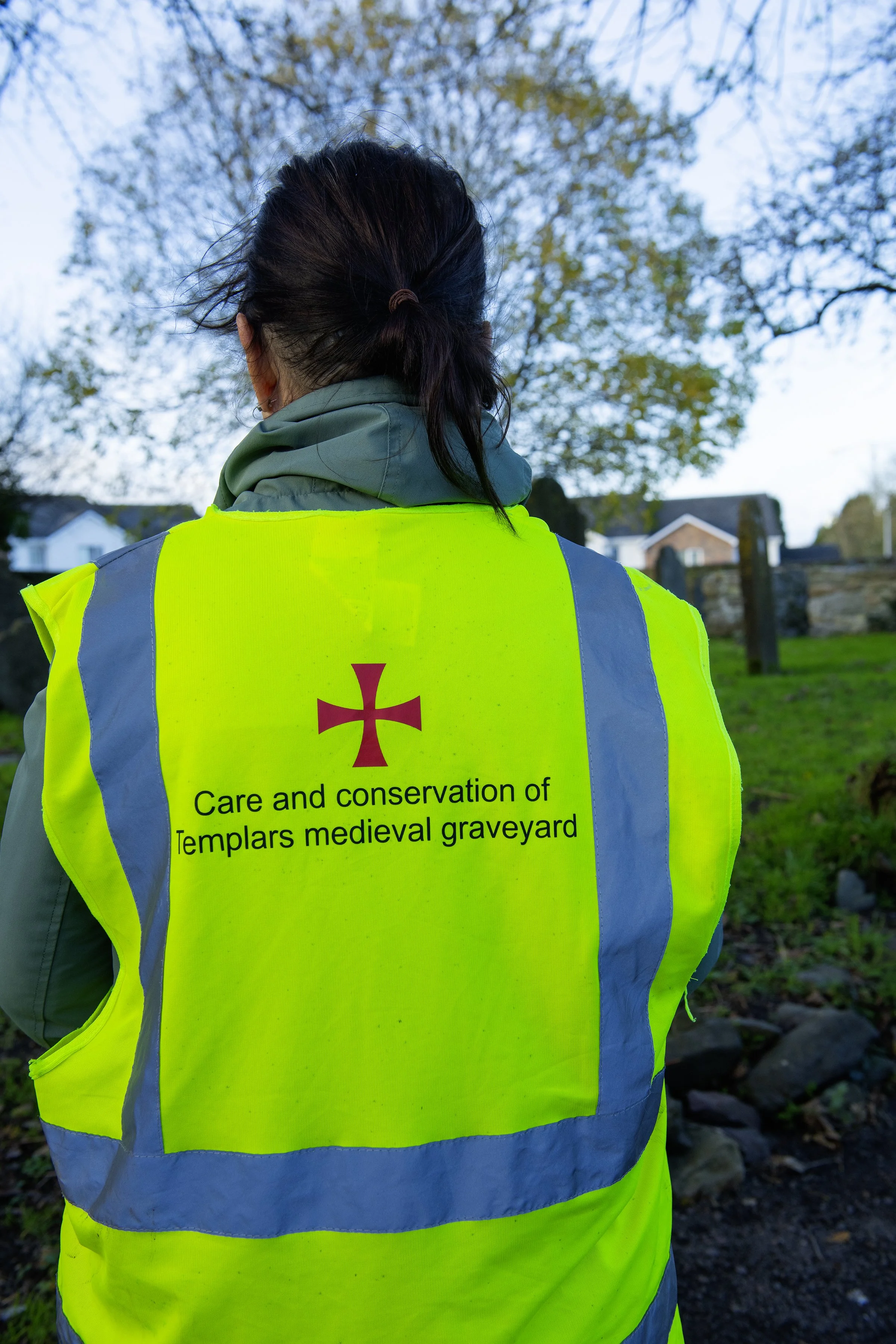
Above is Maggie, the first volunteer to stand beside Paddy and his granddaughter Katie, helping to breathe new life into the forgotten gardens of Kilbarry. Through countless hours of quiet dedication, she transformed not only the landscape but also the spirit of this ancient sacred place, creating the beautiful butterfly wall.
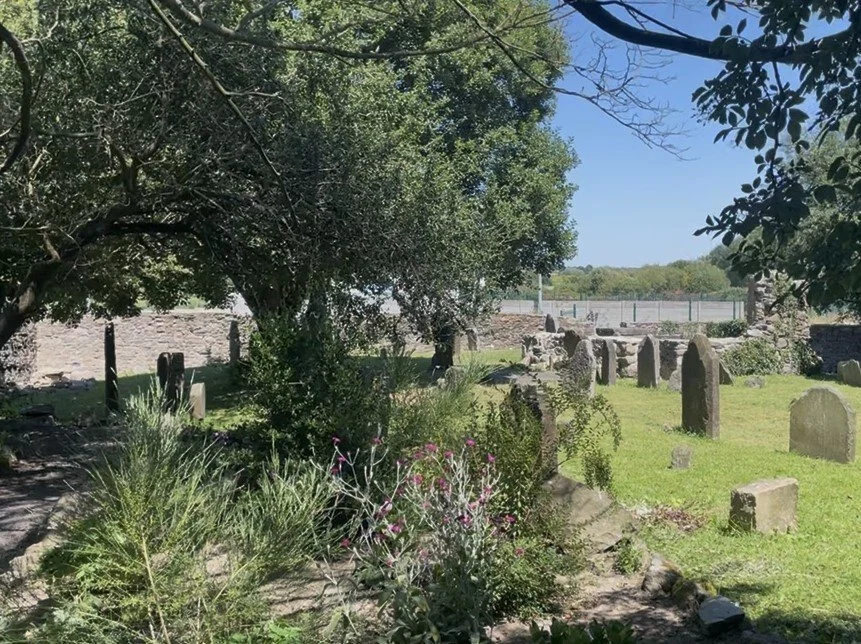
Kilbarry stands as one of Ireland’s earliest and most important Templar preceptories, granted by Henry II in 1180 on land already long marked as sacred. As an administrative, economic, and spiritual hub, it bound Waterford’s frontier into the wider networks of crusade and Christendom, while continuing older traditions of veneration rooted in the landscape. Even after the Templars’ suppression, Kilbarry endured under the Hospitallers, leaving behind a layered legacy that speaks of faith, power, and continuity across centuries.
—Helena B. Scott, dissertation excerpt, MA in Public History and Cultural Heritage
-
Kilbarry: Ancient Sacred Site & Templar Preceptory, Church and Cemetery
HISTORY
-
The Dream of a Young Girl and Her Grandfather
How Kilbarry Knights Templar Graveyard was saved by a school project begun by a 10 year old girl named Katie Houlihan with her grandfather Paddy Houlihan.
-

A Community Participatory Outdoor Museum
-

Step Back In Time
SELF-GUIDED AUDIO TOUR
-
An Authentic Templar Garden
-
Maggie Moody's Butterfly Wall
REMEMBRANCE
-
Photo Timeline
An illustrative photo time-line of the early day’s of Kilbarry Knights Templar cemetery gardens restoration
-
Kilbarry Knights Templar Graveyard Project
-
Virtual Katie's Corner
© 2026 Helena B. Scott. All rights reserved.